
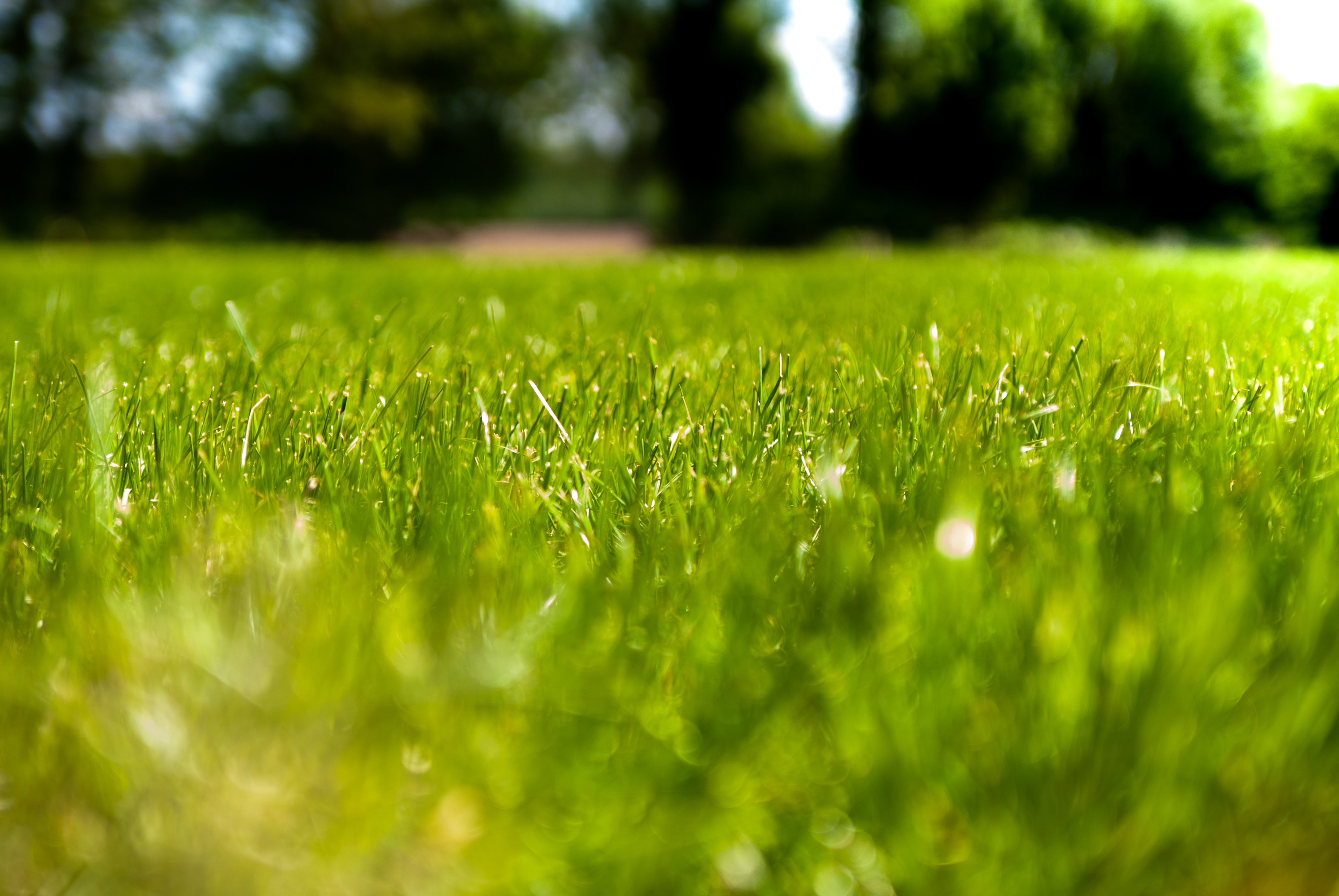
Walk around most new housing developments and you'll notice a common trend. Gardens are getting smaller, landscaping budgets are under pressure and, all too often, the lawn is treated as little more than the finishing touch before the keys are handed over.
That is a shame, because a good quality lawn remains one of the most cost-effective ways to improve the appearance, usability and environmental performance of a development.
For many homeowners, the garden is one of the reasons they buy a property in the first place. It provides space for children to play, pets to exercise and families to spend time outdoors. Yet despite this, the quality of lawns delivered with new-build homes can be highly variable.
The problem is not that people no longer value lawns. The problem is that too many lawns are being installed into conditions where they have little chance of succeeding.
Across the construction industry, there is understandably significant focus on the quality of the buildings themselves. However, landscaping can sometimes become an afterthought. Ground preparation may be limited, topsoil depths reduced, drainage overlooked and budgets squeezed. In some cases, turf is laid onto compacted ground that has spent months accommodating heavy machinery and construction traffic.
When a lawn subsequently struggles to establish, becomes waterlogged during winter or dries out during summer, natural turf is often blamed. In reality, the underlying issue is usually the condition of the soil beneath it.
The irony is that the additional investment required to create a successful lawn is relatively modest when compared with the overall value of a new home. A little more attention to soil quality, drainage and turf specification can dramatically improve the finished result and reduce complaints from homeowners after occupation.
The benefits extend far beyond appearance.
As pressure grows on drainage infrastructure and developers face increasing scrutiny around surface water management, it is worth remembering that natural turf remains one of the simplest permeable surfaces available. Every square metre of healthy lawn helps absorb rainfall and slow the movement of water through a development. Whilst turf alone is not a drainage solution, it can form an important part of a wider strategy to manage surface water and create more resilient communities.
There is also the question of temperature. During periods of hot weather, grassed areas remain noticeably cooler than paving, tarmac and artificial surfaces. As urban areas continue to expand and concerns around overheating increase, natural green spaces can play a valuable role in creating more comfortable environments for residents.
Beyond the environmental benefits, there is the simple matter of quality of life. Access to attractive green space remains important to homeowners, particularly as more people spend time working from home and place greater value on their immediate surroundings. A well-maintained lawn provides a practical outdoor space that can be enjoyed by people of all ages.
Of course, not all turf is the same.
The Turfgrass Growers Association (TGA), which represents professional turf growers across the UK, has spent many years promoting production standards designed to ensure consistency and quality. These standards cover aspects such as turf health, composition, strength and overall performance, helping to provide confidence for contractors, developers and end users alike. The standards have been used as a benchmark across the industry and have previously featured in major projects, including landscaping associated with the London 2012 Olympic Games.
The industry is also evolving to meet changing environmental expectations. Following an overwhelming vote by members, TGA growers are working towards the complete removal of plastic reinforcement netting from turf production by October 2026. The decision reflects a growing recognition that landscape products should deliver environmental benefits without introducing unnecessary plastics into the landscape.
The construction sector rightly spends considerable time discussing sustainability, biodiversity and placemaking. Yet one of the simplest tools available to help achieve all three objectives is often installed during the final few days of a project.
A quality lawn will never be the headline feature of a development, but it often becomes one of the most heavily used. Long after the sales office has closed and the contractors have moved on, it is the green spaces around homes that residents interact with every day.
Perhaps it is time we stopped treating turf as a finishing touch and started recognising it as an important part of good development design.
Andy Smith,
Turfgrass Growers Association