
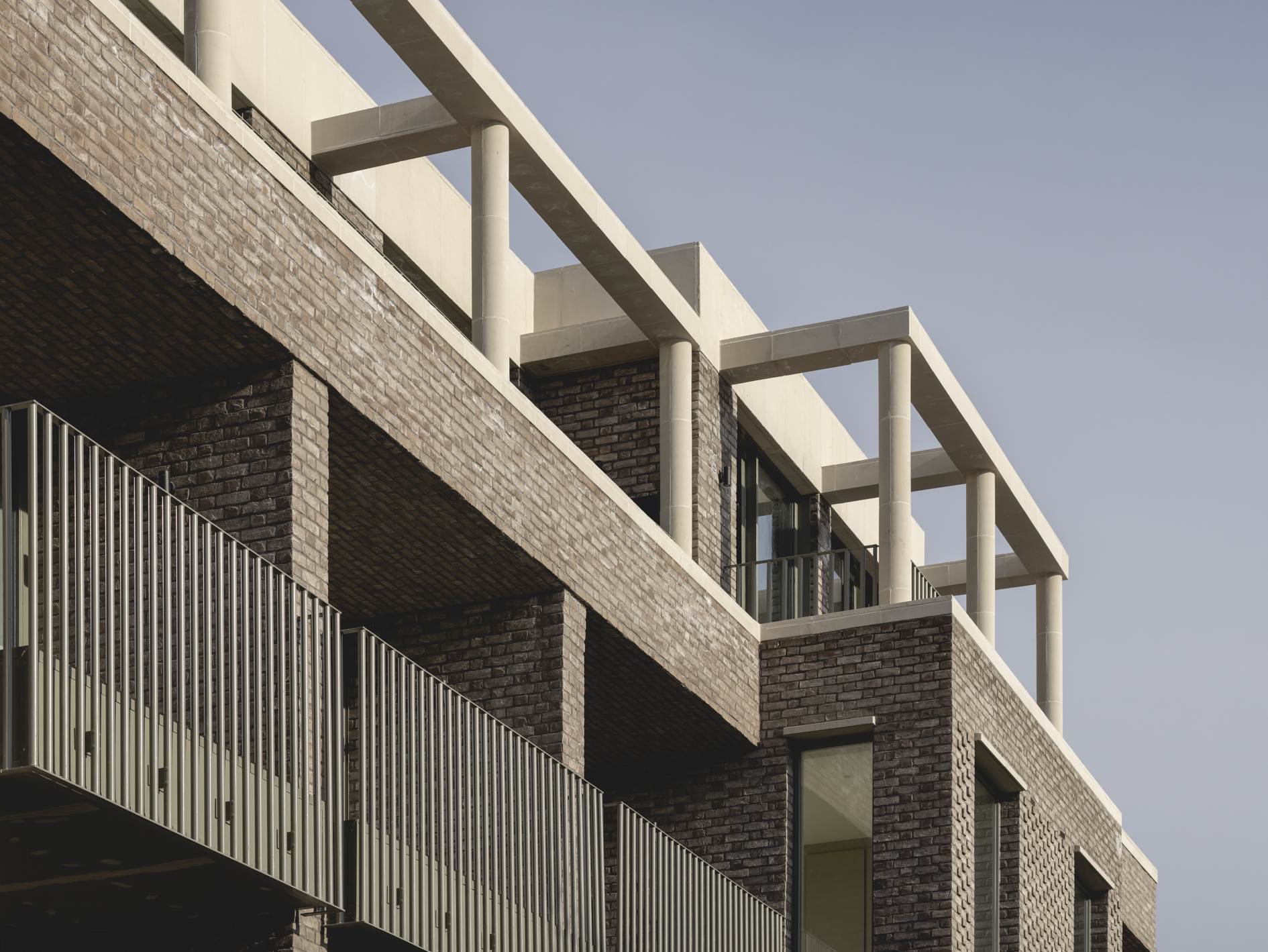
London:HUThas designed and builta new multi-unit apartment building on a tight 2700m2 site in Clapham, London. Clapham Quarter transforms what was an underused, awkward car park, into a hidden cluster of inclusive and timeless dwellings. Fit for modern city life, the apartments value quality of light and space, sustainability, and privacy. The design sympathetically responds to the wider context and community, which includes natural elements, while ensuring a high-end experience for homeowners. Clapham Quarter shows how an awkward brownfield site can become desirable homes, thanks to a considered architectural approach.
Sleek, refined living:Located close to Clapham South Tube Station and Clapham Common, the development comprises three architecturally distinctive buildings, with a stepped massing of between one to four storeys, to create thirty-sixapartments,ranging from one to three bedrooms. Clapham Quarter delivers excellent living for homeowners, great value for client Landhold, while enhancing the area with care. Clapham Quarter follows the Be Lean/Be Clean energy hierarchy as its overriding approach to sustainable development.
HUT has thoughtfully arranged the space to offer a variety ofconfigurations; these are not cookie-cutter boxes, in fact, 75% are unique designs. This means that Clapham Quarter features layouts are suitable for solo dwelling, couples, co-housing, families, and multi-generational occupancy. Each apartment has either a balcony or terrace garden, and sight lines across the apartment to maximise outlook from within, increasing a sense of spaciousness. Hit-and-miss brickwork is used for screening, crucially,without blocking out light. The living spaces are all multi-functional, and plenty of built-in storage space is included. HUT understands city living, acknowledging the importance of calmness, with connections to nature through the views, light, and planting. Spaces for rest and play offer enhanced wellbeing in a busy environment, as well as moments for community.
Contemporary materials nod to local history: Clapham Common has long served as a vital open green space, and its historic listed bandstand provided the inspiration decorative stonework and colonnades for the buildings’ entranceareas and balconies.The balustrade is powder-coated steel in Moss Green, which also references the famous Clapham Bandstand.These considerations create impact and a sense of place, while generous porched entrances add elegant rhythm to the façadewith colonnades, referencing early 20th century designs, but with pared back elegance.
Each material has been carefully selected for itscontemporary, grounded feel. The subtle grey buff brick tone, with Flemish Bond pattern, references the local Victorian and Edwardian buildings, yet has its own quiet beauty. Internally, natural tones for floorings and fittings have been used. Communal areas are decorated with a soft neutral note, through generous areas of timber panelling and off-white decoration.
Hitting the important notes: One of the challenges came from how tight the urban site is; narrow spaces typically have short sightlines. To create the connection with the outdoors for the all-important sense of space and associated well-being, HUT elongated the site. This means residents can see from the front right through to the gardens at the back of the development, and beyond. This tactic avoids feeling hemmed in or constrained and instead createssought-after openness.
Lean and Green: The site had an existing permission that was bland in appearance and compromised in layout.HUT was brought in to breathe life into it, creatingbetter designedapartments, and delivering a high-end finish. The massing was slightly expanded, the amount of glazing to the northern façade was increased by 50%, without compromising overlooking.What’s more, Clapham Quarteroutperforms the norm in terms of sustainable design. It is highly insulated, with a low energy approach to limit operational energy use. The project meets the target of reducing carbon emissions by 35% below2013 Building Regulations through a combination of ASHPs alongside a thermally efficient envelope.
Increased biodiversity: From a shabby tarmacked car park with limited low-quality vegetation, Clapham Quarter now boasts a 10-fold increase in biodiversity. There is a green roof and garden space, plus the balconies across all floors encourage further planting. The planting strategy by Outerspace and HUT is designed to support resilientnative wildflowers, as well as create habitats for invertebrates and birds. The intensive green roof, permeable hardstanding and site wide attenuation combine to significantly reduce surface water run-off rate and divert rainwater from the overwhelmed sewer system.
Challenges and outcomes: Project Architect Todd Courtneysays, “The finished building prioritises quality of living spaces, well-being, a strong connection to green areas, and opportunities for social interaction in well-appointed common areas. One of the constant challenges as an architect is to be as ‘green’ as possible; some elements of landscape and planting had to be rethought, as materials and labour costs went up, but there remains a huge scope to increase planting over time. As the residents of Clapham Quarter settle in, we’ll see more urban gardens flourish on the balconies and terraces in this quiet oasis, a stone’s throw from the busy main road.”
The client was delighted to sell over 75% of the dwellings off plan; a testament to the great design and desirability of considered, green spaces for living. Completed in 2025, 80% of all homes are sold, according to data company Molior, making it in the top three developments selling in London.